We explore some of Wikipedia’s oddities in our 7,267,180-part monthly series, Wiki Wormhole.
This week’s entry: Ni’ihau Incident
What it’s about: A day that will live in infamy, and the several days that followed. On December 7, 1941, a Japanese fleet launched a surprise attack on the docked U.S. Pacific Fleet in Pearl Harbor, Oahu, Hawaii, which resulted in 2,403 American deaths. 129 Japanese personnel were killed, and while Japan did infamously use kamikaze attacks—sending a pilot on a suicide mission to deliberately crash their plane into enemy aircraft— those tactics were only adapted late in the war.
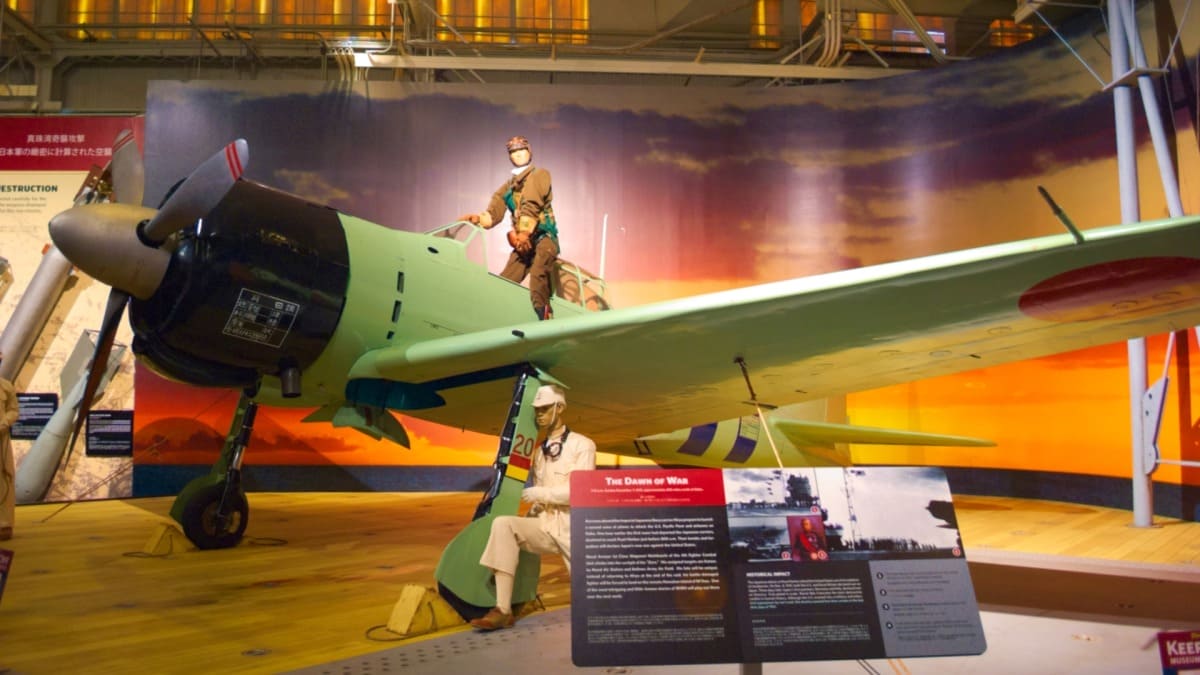
The Pearl Harbor attack was launched from aircraft carriers, and pilots were expected to return safely. However, the Japanese did have a contingency plan—pilots with damaged planes were directed to make an emergency landing on nearby Ni’ihau island, which Japanese intelligence believed was uninhabited. They were wrong.
Only one pilot, Shigenori Nishikaichi, reached Ni’ihau after the attack, and was immediately discovered by the locals. While Ni’ihau was and is sparsely populated, that’s largely because it was owned by a wealthy white family, the Robinsons, who own the island to this day. The island is off-limits to visitors, apart from the extended family and U.S. military personnel. The locals—who hadn’t yet received news of the attack—initially took Nishikaichi in as a guest, although they did take his weapons.
Biggest controversy: The Ni’ihau incident gave America its first prisoner of the war, but also its first traitor. Hawila Kaleohano, the Hawaiian who saw Shigenori’s plane crash, had the good sense to seize his pistol and his papers immediately, but afterwards, treated the pilot as a guest, even throwing a party for him in the afternoon. He also sent for a Japanese-born neighbor, Ishimatsu Shintani, who could translate. Shintani exchanged only a few words with the pilot, and quickly “departed without explanation.”
Kaleohano then called in the remaining Japanese-American population of the island: Yoshio and Irene Harada, who were Hawaiian-born, but spoke Japanese. Shintani told the Haradas of the attack, and instead of sharing this information, the Haradas resolved to help him. As the island had neither electricity nor telephones, news of the attack would not reach the island until someone heard a report on a battery-operated radio that evening. Once the locals learned of the attack, they posted guards around the Haradas’ home, where the downed pilot was staying. But the Haradas remained on his side.
Strangest fact: Nishikaichi was more concerned with recovering his papers than being held prisoner by a country he was now at war with. He had been instructed not to let his flight documents fall into enemy hands—as they contained details about how Pearl Harbor was carried out—but Kaleohano had taken them and refused to give them back. The pilot convinced Shintani to offer Kaleohano a ¥200 bribe, which was refused. So Nishikaichi and Yoshio Harada attacked the guard posted outside the Harada home, while Irene Harada played music to cover the sounds of a struggle. They locked the guard in a warehouse, recovered the pilot’s gun, and picked up a shotgun for good measure.
They headed for Kaleohano’s house, but as luck would have it, Kaleohano was using the outhouse. He saw them approach the house and fled into town with Nishikaichi’s documents in hand, warning his neighbors that the pilot had escaped, and was armed and dangerous. Most residents fled to the wilderness. Nishikaichi took advantage by returning to his plane, recovering one of the aircraft’s machine guns, and trying (unsuccessfully) to radio the Japanese fleet. He then burned the plane to prevent it from falling into enemy hands.
Thing we were happiest to learn: America won its first, and smallest, battle of the war. Kaahakila Kalimahuluhulu and Ben Kanahele had been recruited to help search for Kaleohano, who had vanished after warning the populace. Instead, the two decided to go after Nishikaichi, and steal back the machine gun. Nishikaichi and Harada got the better of them, and held the two, and Kalima’s wife Ella hostage. (Wikipedia shortens Kalimahuluhulu, so we will as well.)
Nishikaichi threatened to kill them and everyone else in town if they didn’t reveal Kaleohano’s whereabouts. Kalima knew exactly where Kaleohano was—rowing a boat to Kaua’i to get help—but kept quiet. When Nishikaichi pulled his gun to threaten him, Ella Kanahele grabbed his arm. Harada pulled her off, and the pilot shot her husband three times. Even wounded, Ben Kanahele was able to pick Nishikaichi up and throw him into a stone wall, knocking him unconscious. Ella then bludgeoned him to death with a rock. Harada, realizing both that he had lost and that he would be punished for aiding an enemy combatant, killed himself with the shotgun.
Thing we were unhappiest to learn: America won the day, but so did sexism. Ben Kanahele made a full recovery from his wounds, and was awarded both the Medal for Merit and the Purple Heart upon the war’s conclusion. Ella, who attacked an armed enemy pilot with her bare hands and then beat him to death with a rock, received no recognition.
More unhappily, the fact that the entirety of the island’s three-person Japanese-American population was willing to help Nishikaichi stoked sentiment against Japanese Americans, and was seen as evidence they couldn’t be trusted—the justification used for building internment camps. While few Hawaiians of Japanese descent were interred during the war, Shintani was one of them, although he was returned to his family and became a U.S. citizen. Irene Harada was arrested for her part in protecting Nishikaichi, but was never charged with a crime.
Best link to elsewhere on Wikipedia: Ni’ihau itself is worth exploring. The seventh-largest island in the chain, it has been privately owned since Scottish plantation owner Elizabeth Sinclair purchased it from the then-independent Kingdom of Hawai’i in 1864, for $10,000 in gold. (The cash would be worth $212,000 today, but the gold would be worth $2.18 million—in either case, a steal for a 69.5 square mile tropical island.) When she died, the island passed to the Robinsons, another branch of the family (although Sinclair had three sons who presumably would have had the name Sinclair; Wikipedia does not reveal why they were passed over).
The island’s current owner, Keith Robinson, has expressed his desire to keep the island closed to protect the island’s wildlife and cultural traditions. He claims to have spent over $250,000 protecting endangered local plants, and has banned radios, televisions, and cell phones on the island in an effort to keep local culture untainted by modernity. However, the Robinsons’ strict rules also include a ban on alcohol and cigarettes, as well as beards and long hair on men. Locals are prohibited from talking to the media, and if they leave the island for an extended period of time, they can be banned from returning.
Further down the wormhole: The Ni’ihau Incident wasn’t the only small-scale WWII battle on American soil. The Battle Of Los Angeles took place a few months later, in which an anti-air gunner mistook a weather balloon for an incoming Japanese plane and set off an anti-air barrage that resulted in five deaths—three from car accidents, two from heart attacks. While it was merely an instance of someone jumping the gun in the aftermath of a surprise attack, some speculated that it was somehow deliberate psychological warfare on the part of the Japanese. While psychological warfare can be serious stuff during wartime, it also has more benign forms, including deplatforming, protests, and “hacktivism”; the use of online guerilla tactics to send a political message. Well-known hacktivist groups include Anonymous, Adbusters, Guerilla Girls, and the band Negativland. Among the lesser-known are the Society For Indecency To Naked Animals. We’ll make sure no reindeer are streaking through the sky next month.


 Keep scrolling for more great stories.